





SEO for Building Tools Shop: from 6238 Visits to 51353
Online Store of Tools:
URL hidden
SEO (Search Engine Optimization) for a building tools shop is the process of optimizing the shop’s website and online presence to increase visibility in search engine results, attract more relevant traffic, and drive sales of building tools and related products. This includes targeting customers such as contractors, DIY enthusiasts, and construction professionals searching for specific tools, brands, or solutions.
Key Components of SEO for a Building Tools Shop:
1. Keyword Research
- Targeted Keywords: Focus on specific keywords related to tools such as "power drills," "screwdrivers," "saws," or "construction tool sets." Also include tool brands like "Makita power tools" or "DeWalt drills."
- Category Keywords: Broaden to include categories like "hand tools," "power tools," "plumbing tools," or "carpentry tools."
- Location-Based Keywords: For local searches, incorporate terms like "building tools store near me" or "construction tools in [city]."
2. On-Page Optimization
- Product Pages: Optimize each product page with detailed descriptions, specifications, and keywords. Highlight important features like durability, warranty, or multi-functionality.
- Meta Titles and Descriptions: Use relevant and compelling meta titles and descriptions, such as "Buy Quality Building Tools | Hand and Power Tools Online" to improve click-through rates.
- Service Pages: If the shop offers tool repair or rentals, optimize service pages with keywords such as "tool repair near me" or "tool rental services."
3. Local SEO
- Google My Business: Ensure the shop’s Google My Business listing is fully optimized with accurate information, reviews, and photos. This helps attract local traffic.
- Local Listings: Submit the store to local business directories, ensuring accurate contact details and store hours for local searches.
4. Content Marketing
- How-To Guides: Publish helpful content like "How to Choose the Right Power Tools" or "DIY Tips for Home Renovation" that will attract users looking for advice on building tools.
- Tool Comparisons and Reviews: Write blog posts comparing different brands or models of tools to guide potential buyers, such as "Best Power Drills for Contractors."
- Tutorials and Videos: Share video tutorials on tool usage, maintenance tips, and safety precautions to engage and inform customers.
5. Technical SEO
- Mobile-Friendly Design: Ensure the website is fully optimized for mobile users, as many customers may browse for tools on their smartphones.
- Fast Loading Speeds: Improve page load times to reduce bounce rates and enhance the user experience.
- Structured Data: Use product schema to help search engines display rich results such as product ratings, prices, and availability.
6. Link Building
- Industry Links: Gain backlinks from construction blogs, home improvement sites, and tool review websites.
- Partnerships: Collaborate with contractors or influencers in the building industry to feature your shop’s products, increasing credibility and visibility.
7. User Reviews and Ratings
- Customer Reviews: Showcase user reviews on product pages and encourage customers to leave feedback on external platforms like Google or Yelp.
- Social Proof: Highlight customer testimonials and tool performance reviews to build trust with new buyers.
8. E-commerce Optimization
- Clear Product Listings: Ensure each tool has high-quality images, detailed specs, and multiple product views.
- User-Friendly Checkout: Optimize the checkout process for simplicity and security to reduce cart abandonment rates.
- Product Filters: Implement detailed filtering options (e.g., by brand, type, or tool feature) to enhance user experience.
9. Voice Search Optimization
- Natural Queries: Optimize content for voice search queries like "best building tools for home renovations" or "where to buy construction tools near me."
10. Conversion Rate Optimization (CRO)
- Strong CTAs: Use clear calls-to-action (CTAs) like "Shop Now," "Get Your Tools," or "Free Shipping on Orders Over $100" to increase conversions.
- Discounts and Offers: Highlight sales, tool bundles, or discounts prominently to encourage purchases.
11. Social Media Integration
- Product Promotions: Use social media platforms like Instagram, Facebook, and YouTube to showcase new tools, promotions, and customer testimonials.
- Engagement: Share user-generated content or professional tips to keep customers engaged and informed about the latest trends in building tools.
12. Analytics and Tracking
- Monitor Performance: Use Google Analytics to track visitor behavior, conversions, and search performance, refining SEO strategies as needed.
- Search Console: Regularly check for indexing issues or ranking drops and take corrective action.
Our task was to increase the traffic of the online tools store so that the client could notice an increase in conversion and profit due to the influx of new buyers from search engines.
What we did to promote the online store
- Perform external and internal search engine optimization of the site to improve the ranking of the online store by the search engine;
- We made a more thoughtful and correct structure to improve interaction with a potential buyer;
- Identified and eliminated existing SEO errors on the site that prevented it from moving forward;
- Created a semantic core of relevant keywords based on the commercial activities of an online store - online sales of tools in Ukraine;
- For landing pages (categories, subcategories, product cards) we wrote high-quality SEO texts, adhering to our unique methodology;
- Supplemented pages with meta tags with keywords to improve indexing.
What was achieved after working with the shop website
- With the help of an effective marketing strategy, traffic increased almost 9 times:
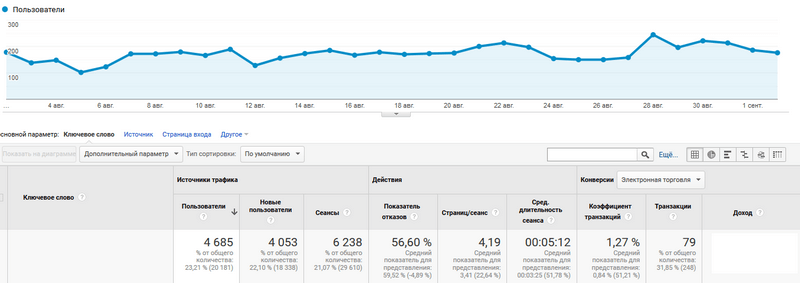
- before SEO - 6,238 visits per month;
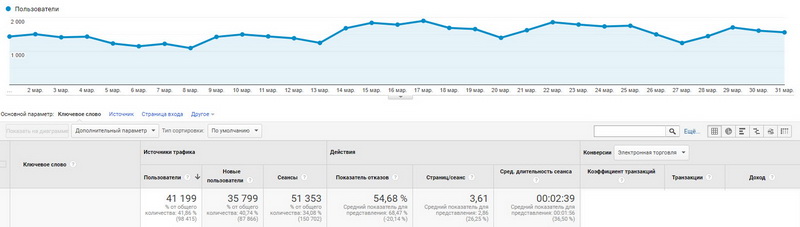
- after SEO - 51,353 visits per month.
- The site of the online tool store was optimized for 3446 keywords.
Over 18 months of promotion, its visibility in the search engine has improved to the following indicators:- 864 keywords - Rank-3;
- 1672 keywords - Rank-10;
- 2246 keywords - Rank-30.
Keywords in Google Rank before SEO:

Rank keywords after SEO:

Traffic before SEO - 6,238 visits:
Traffic after SEO - 51,353 visits:
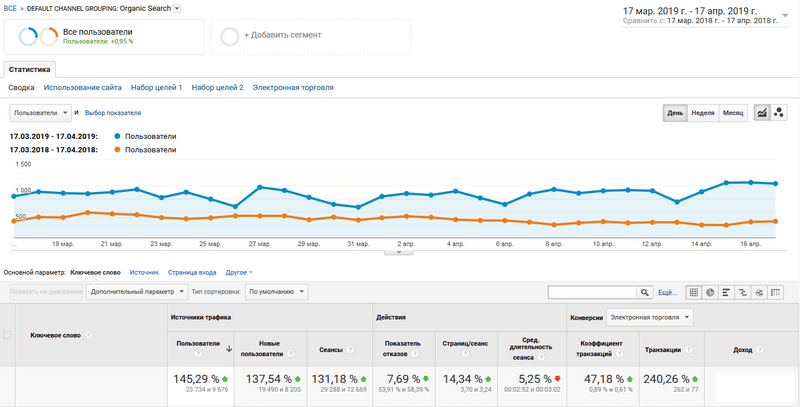
Traffic Growth Graph:

Traffic comparison vs. last year:
SEO result of website promotion:
The site has been optimized for 3446 keywords.
For 29 months of work in the Rank promoted:
Rank 3 - 864 keywords = 18% of queries;
Rank 10 - 1672 keywords = 41% of queries;
Rank 30 - 2246 keywords = 59% of queries.
Keywords in Rank 3: